
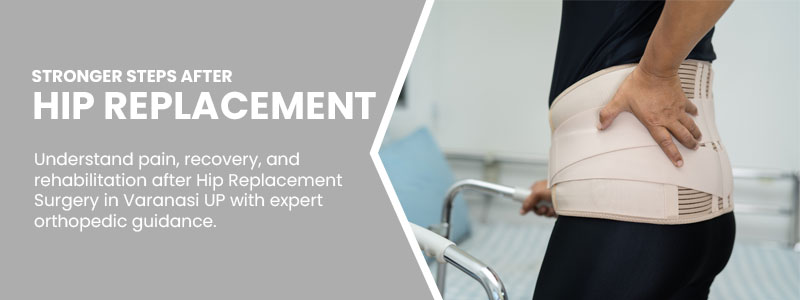
Recovery After Hip Replacement Surgery in Varanasi UP: Healing & Rehabilitation
Hip Replacement Surgery in Varanasi UP is often described as a corrective or restorative procedure, but for patients, the real journey begins after the operation. Pain during recovery is not just about discomfort. It affects sleep, confidence, mobility, mood, and the belief that the body will feel normal again. Many patients undergoing Hip Replacement Surgery in Varanasi UP worry whether what they feel is expected, whether pain means something is wrong, or how long the recovery discomfort will last.
Pain after Hip Replacement Surgery in Varanasi UP does not follow a single pattern. Some days feel encouraging. Others feel frustrated. Understanding how pain behaves, why it changes, and how to respond to it calmly can make recovery smoother and far less intimidating.
Understanding Post-Surgery Pain
Pain after Hip Replacement Surgery in Varanasi UP is not a sign of failure or poor healing. It is the body responding to tissue repair, inflammation, and temporary changes in muscle balance. Bone, cartilage, ligaments, and muscles around the hip need time to adapt to their new alignment or repair.
What surprises many patients is that pain does not decrease in a straight line. It may improve for a few days and then return after increased activity or physiotherapy. This does not usually mean damage. It often means the body is learning new movement patterns.
Recognising pain as information rather than danger helps reduce anxiety and muscle tension, which themselves can worsen discomfort.
Why Hip Replacement Surgery Pain Feels Different From Other Surgeries
Post-surgery hip pain behaves differently because the hip is involved in nearly every movement. Sitting, standing, turning in bed, and even shifting weight while brushing teeth involve the hip joint. Other factors that influence pain perception include:
- Deep joint location that causes aching rather than sharp pain
- Muscle guarding as the body tries to protect the area
- Changes in walking mechanics during early recovery
- Nerve sensitivity around the pelvis and thigh
Because the hip supports posture and balance, pain often increases when the body feels uncertain or unstable. Addressing confidence and movement safety becomes as important as pain medication—especially for those seeking Hip Replacement Surgery in Varanasi UP.
The First Two Weeks
Early recovery pain often feels intense because swelling and inflammation are highest during this phase. Many patients worry they are moving too little or too much. The truth lies in balance. Key principles during early recovery include:
- Rest with purpose rather than complete inactivity
- Short, gentle movements prevent stiffness
- Positioning the hip comfortably while sleeping
- Accepting help without guilt
Pain during this phase often responds well to a combination of medication, icing, and protected movement. Trying to push through pain usually delays recovery rather than speeding it up.
Pain and Sleep
Nighttime pain after Hip Replacement Surgery in Varanasi UP is one of the most common frustrations. When the body rests, swelling redistributes and muscles relax, making discomfort more noticeable. Helpful strategies include:
- Sleeping on the back or non-operated side with pillows for support
- Avoiding long periods in one position
- Taking pain relief before pain peaks at night
- Keeping the room slightly warm to reduce muscle stiffness
Poor sleep increases pain sensitivity the next day, so improving night comfort is not a luxury. It is a core part of recovery.
Frequently Asked Questions
- How long does pain usually last after Hip Replacement Surgery in Varanasi UP?
Pain typically improves over several weeks, with a gradual reduction over months. Mild discomfort may persist during activity early on. - Is it normal for pain to come and go during recovery?
Yes, pain often fluctuates with activity levels and healing stages. - Can weather changes affect hip surgery pain?
Some patients notice increased stiffness or aching in cold or damp weather due to muscle tension. - Should I avoid pain medication to heal faster?
No, proper pain control supports healing by enabling movement and rest. - When can I expect to feel confident walking without fear?
Confidence usually builds gradually as strength and balance return, often within 2 to 3 months depending on the type of surgery and rehabilitation.